
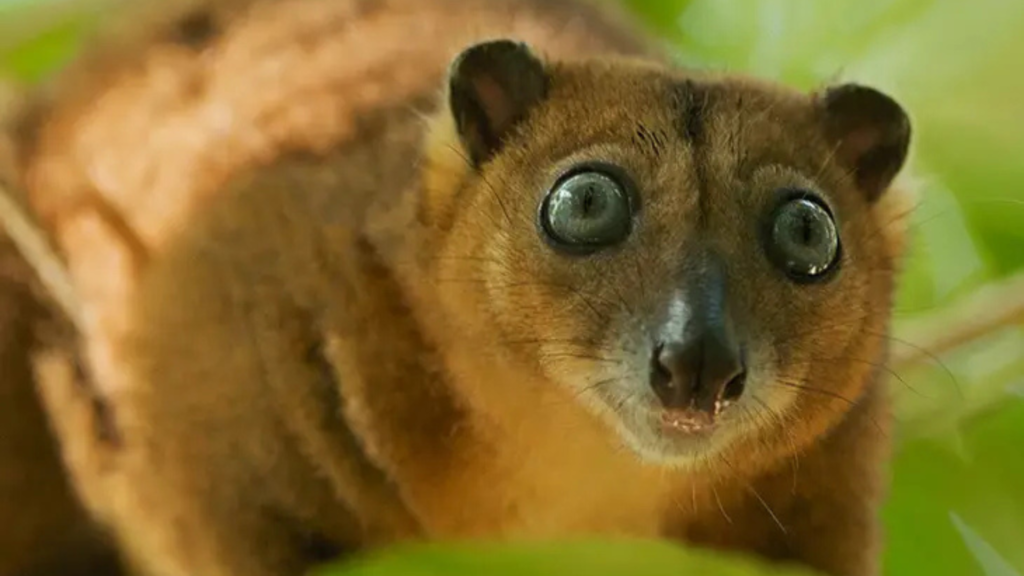
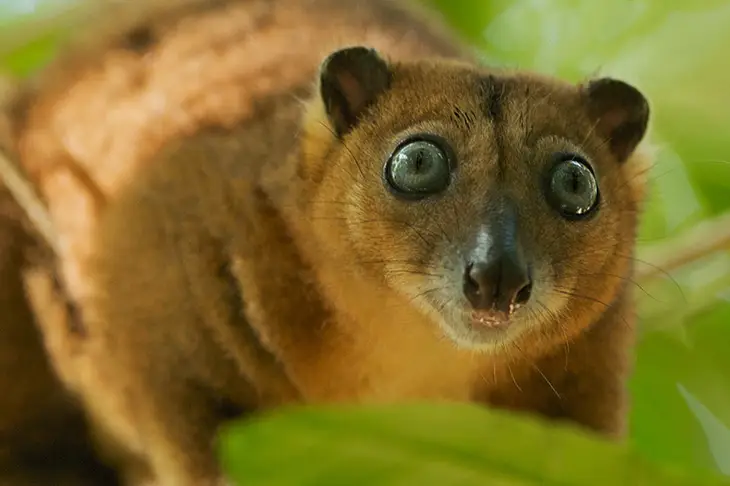
In the humid forests of Ternate and Tidore—two small volcanic islands nestled in the tropical archipelago of Maluku—lives a nocturnal creature so elusive that it feels almost mythical. It is the Blue-Eyed Cuscus (Phalanger matabiru), a marsupial found nowhere else on Earth. Covered in soft brownish fur and blessed with a pair of striking blue eyes that gleam under the moonlight, this animal embodies both the beauty and fragility of the island’s forest life.
Yet its story is far from idyllic. Among local farmers, the blue-eyed cuscus is often regarded not as a wonder of nature but as a pest. It descends from the canopy to feed on fruits such as nutmeg, bananas, and young coconuts—staple crops that sustain many island families. To protect their gardens, some resort to hunting it, unaware that the cuscus is a crucial seed disperser and guardian of forest regeneration. Ironically, the very creature blamed for damaging crops is one that helps preserve the ecological balance of Maluku’s fragile island forests.
From an ecological standpoint, Phalanger matabiru plays an essential role in nutrient cycling and forest renewal. As a frugivore and folivore, it maintains the natural rhythm of the ecosystem—an invisible gardener of the forest. But deforestation, land conversion, and human-wildlife conflict have pushed it toward decline. The blue-eyed cuscus now stands as a paradox: a species dismissed as a nuisance, yet one that signals the health of Maluku’s tropical ecosystems.
Protecting the blue-eyed cuscus means more than saving a single species—it means redefining our relationship with nature. Environmental education rooted in local wisdom can help communities see it not as a threat but as an ally in sustaining life. On these small, vulnerable islands, every species matters, and the loss of one can ripple through the entire ecological web.
Somewhere in the night, as the wind rustles through nutmeg trees, a lone blue-eyed cuscus moves quietly among the branches. It does not fight nor demand—only survives. In its calm, unblinking gaze lies a lesson of coexistence: that nature often endures misunderstanding with quiet grace, waiting for humans to learn how to see again.
Photo: GNFI