
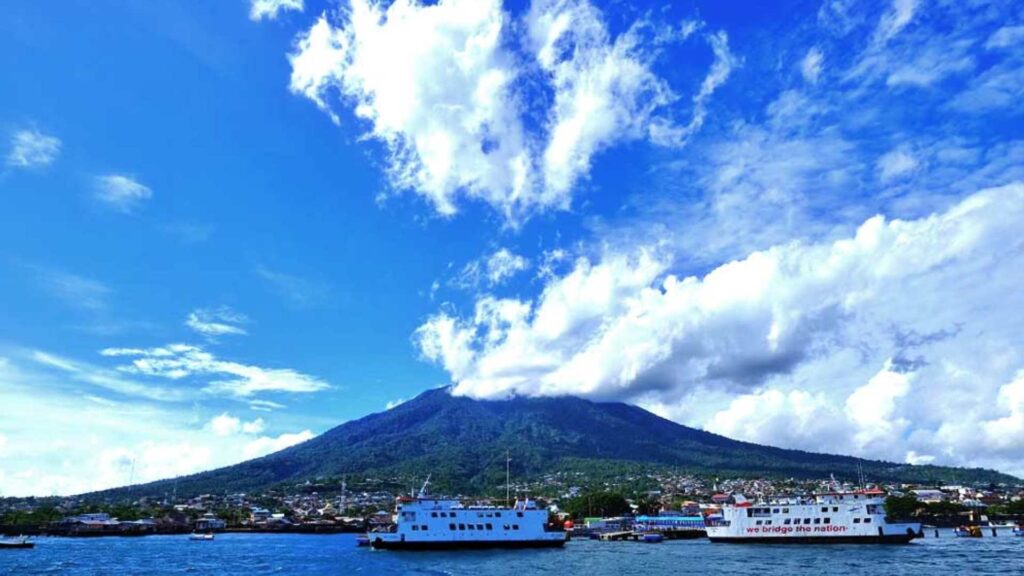
The eruption of Mount Gamalama, located on the island of Ternate, Indonesia, represents a perennial challenge for the people who reside under its shadow. As an active volcano with over 60 recorded eruptions since the 1500s, Gamalama poses significant risks to the surrounding population. Despite this, the Ternate community has developed unique strategies to mitigate these risks, blending traditional rituals and local knowledge in ways that reveal the depth of their cultural and environmental awareness. This essay explores the research conducted by Safrudin Amin, Dewi Apriani Aco, and M. Guntur Cobobi, which examines these mitigation strategies and underscores the critical role of integrating indigenous practices with modern disaster management techniques.
Cultural and Historical Context
Mount Gamalama is more than a physical landmark for the Ternate community; it is a cultural and spiritual symbol. The mountain is perceived through a dualistic lens—it is “Kie,” a representation of prosperity and divine blessings, and “Duko,” a manifestation of potential destruction. This duality encapsulates the community’s nuanced relationship with their environment, wherein they venerate the mountain’s bounty while remaining vigilant to its threats.
Ternate’s rich history as a hub of the global spice trade adds layers to its cultural identity. The traditions and rituals associated with Mount Gamalama are deeply embedded in this historical context, reflecting centuries of adaptation to a volatile natural environment. The community’s rituals and practices reveal a sophisticated understanding of the mountain’s rhythms, enabling them to anticipate and respond to volcanic activity effectively.
Ritual-Based Mitigation Strategies
Rituals are central to the Ternate community’s approach to disaster mitigation. These practices serve dual purposes: spiritual protection and collective preparation. Key rituals include:
- Kololi Kie: This involves circumambulating the mountain, either by land or sea, to seek protection from disasters. Historically conducted during significant events like the Sultan’s commemoration, it reinforces communal bonds and preparedness.
- Fere Kie: A more intensive ritual that includes climbing to the mountain’s summit, accompanied by prayers led by spiritual and cultural leaders. This practice blends Islamic traditions with local beliefs, symbolizing both reverence and a proactive appeal for safety.
- Doa Kie: A sacred prayer specifically dedicated to Mount Gamalama, expressing gratitude and seeking divine intervention to avert disasters. This prayer encapsulates the community’s spiritual philosophy, where faith and nature coexist harmoniously.
Local Knowledge as a Pillar of Preparedness
Complementing these rituals is a rich repository of local knowledge, passed down through generations. This knowledge is integral to disaster preparedness and response, structured into three phases:
- Pre-Eruption Phase: The community monitors natural indicators such as changes in lake water color, animal behavior, and temperature shifts. These signs, derived from centuries of observation, act as early warnings.
- During Eruption Phase: Evacuation protocols, rooted in ancestral practices, guide the community to designated safe zones. The lack of panic during these events underscores the effectiveness of ingrained preparedness.
- Post-Eruption Phase: Recovery efforts include communal cleanups and rituals like Sigofi Gam, which reconcile the community with their environment and reaffirm social cohesion. This phase highlights the integrative role of rituals in environmental restoration and collective healing.
Bridging Traditional and Modern Approaches
The study emphasizes the potential of combining traditional practices with contemporary disaster management. The Ternate Sultanate, with its cultural authority, plays a pivotal role in facilitating this integration. By aligning local wisdom with scientific methodologies, the community can develop more resilient and adaptive strategies.
Broader Implications
The research provides valuable insights for global disaster risk reduction (DRR) frameworks. It highlights the importance of preserving indigenous knowledge and incorporating it into modern practices. This approach is particularly relevant for regions with similar geophysical challenges, where traditional wisdom can complement scientific innovations.
Conclusion
The Ternate community’s approach to disaster mitigation—rooted in rituals and local knowledge—offers a holistic model for addressing natural hazards. By blending spiritual beliefs with empirical observations, they have crafted strategies that are both culturally resonant and practically effective. In an era where global challenges demand innovative solutions, this synergy of tradition and modernity serves as a beacon for sustainable and inclusive disaster management practices. By learning from such communities, we can build resilience that respects both cultural heritage and contemporary advancements.